
DAM Audit — Organizing Creative Chaos
Findings, fixes, and a 90-day roadmap for a digital media boutique.
What Is a DAM Audit? (And Why It Matters)
A DAM audit is more than an inventory of assets or metadata fields — it’s an assessment of how your entire creative ecosystem works.It reveals where discovery breaks down, where taxonomy doesn’t reflect real usage, and where governance gaps slow delivery.A strong audit connects systems, workflows, and people through shared structure. It exposes friction, maps dependencies, and creates the clarity teams need to trust their tools.The goal isn’t documentation — it’s alignment.This approach helps organizations move from managing files to managing meaning, giving them the foundation to scale with less chaos and more confidence.
Overview
In creative ecosystems, chaos isn’t the enemy — disconnection is.
This audit examines how a boutique digital media team lost control of its assets as production scaled across freelancers, contractors, and cloud drives. What began as efficiency turned to entropy — scattered files, incomplete metadata, and no single source of truth.
Through a structured DAM audit, clear governance, and a 90-day roadmap, the team rebuilt clarity — a central repository, consistent metadata, and accountability built into every upload.
This isn’t just a workflow fix — it’s a creative realignment.
Before: Hybrid Creative Ecosystem
The audit began by tracing how scattered storage and duplicate uploads created confusion.
Cloud drives and DAM tools coexisted — but without clear ownership, even small updates spiraled into version chaos.
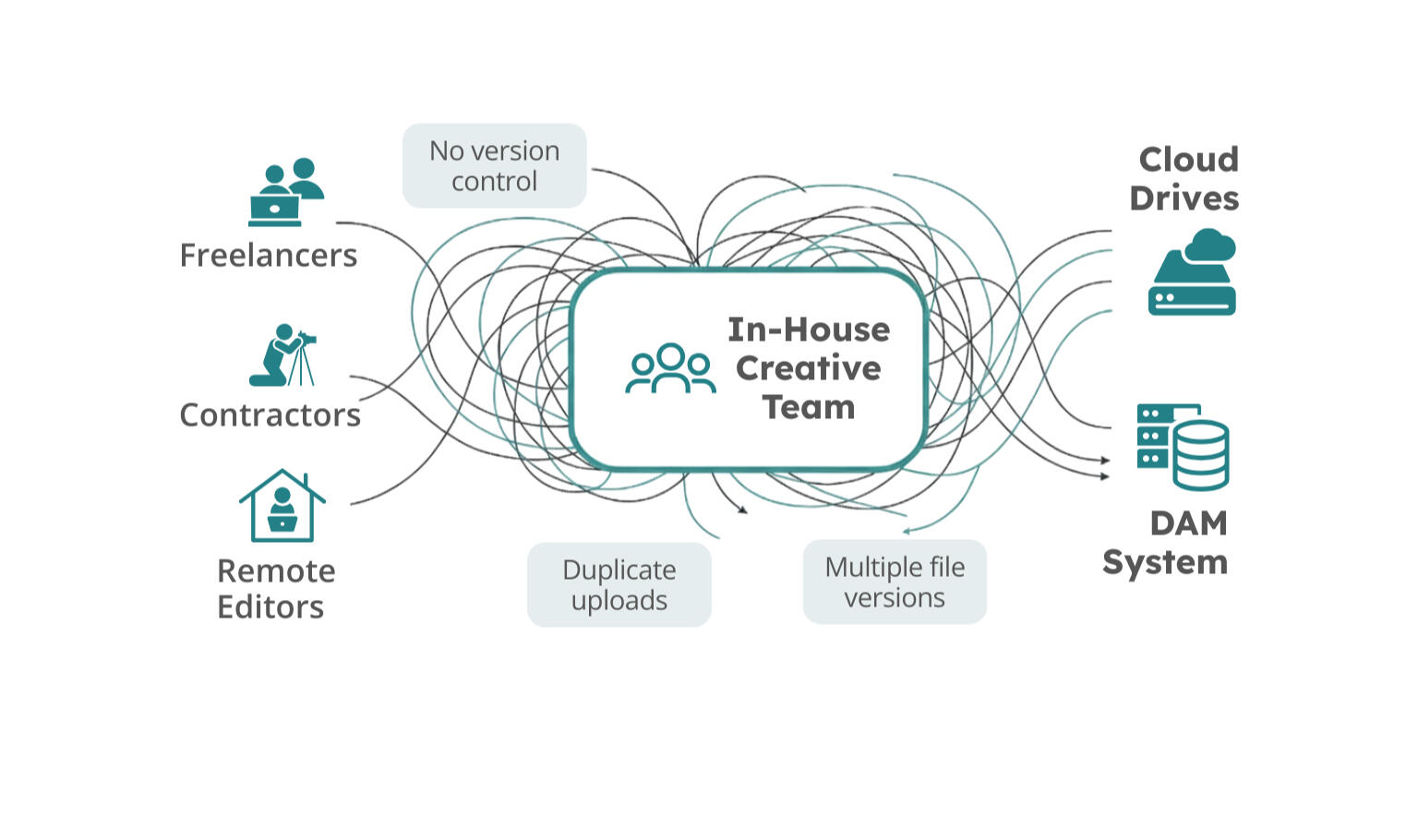
Without governance, assets sprawled across drives — versions multiplied, uploads duplicated, and the team became the bottleneck.
Scorecard: Metadata Completeness
Metadata inconsistency was the root cause. The team’s creative efficiency masked a deeper issue — incomplete records meant assets couldn’t be trusted, reused, or safely licensed.
The fix began with standardizing fields and enforcing completeness before upload.
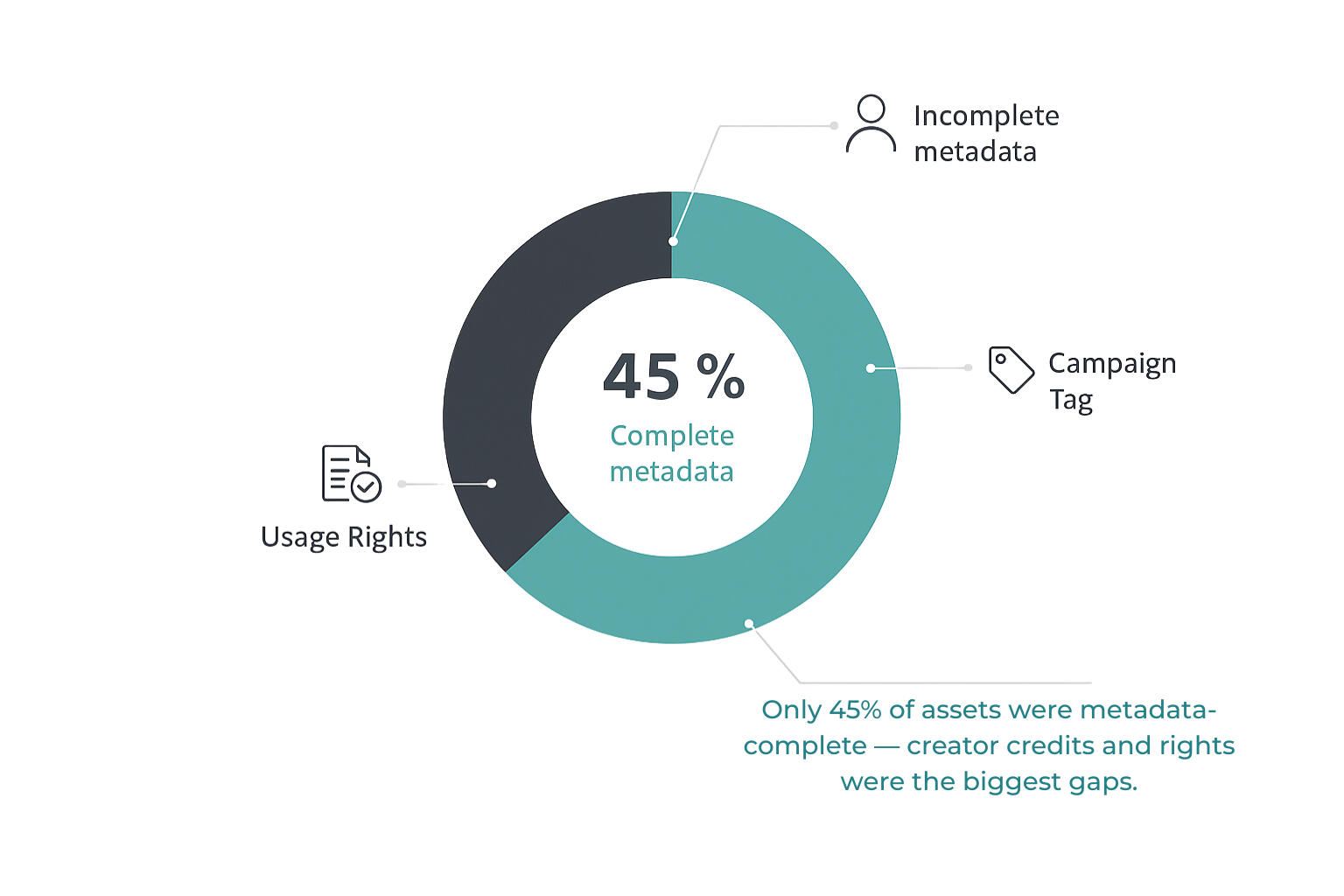
New rule: assets can’t move forward until all required metadata fields are filled.
After: Governance & Metadata Layer
The team introduced a governance layer between creative contributors and the DAM system.
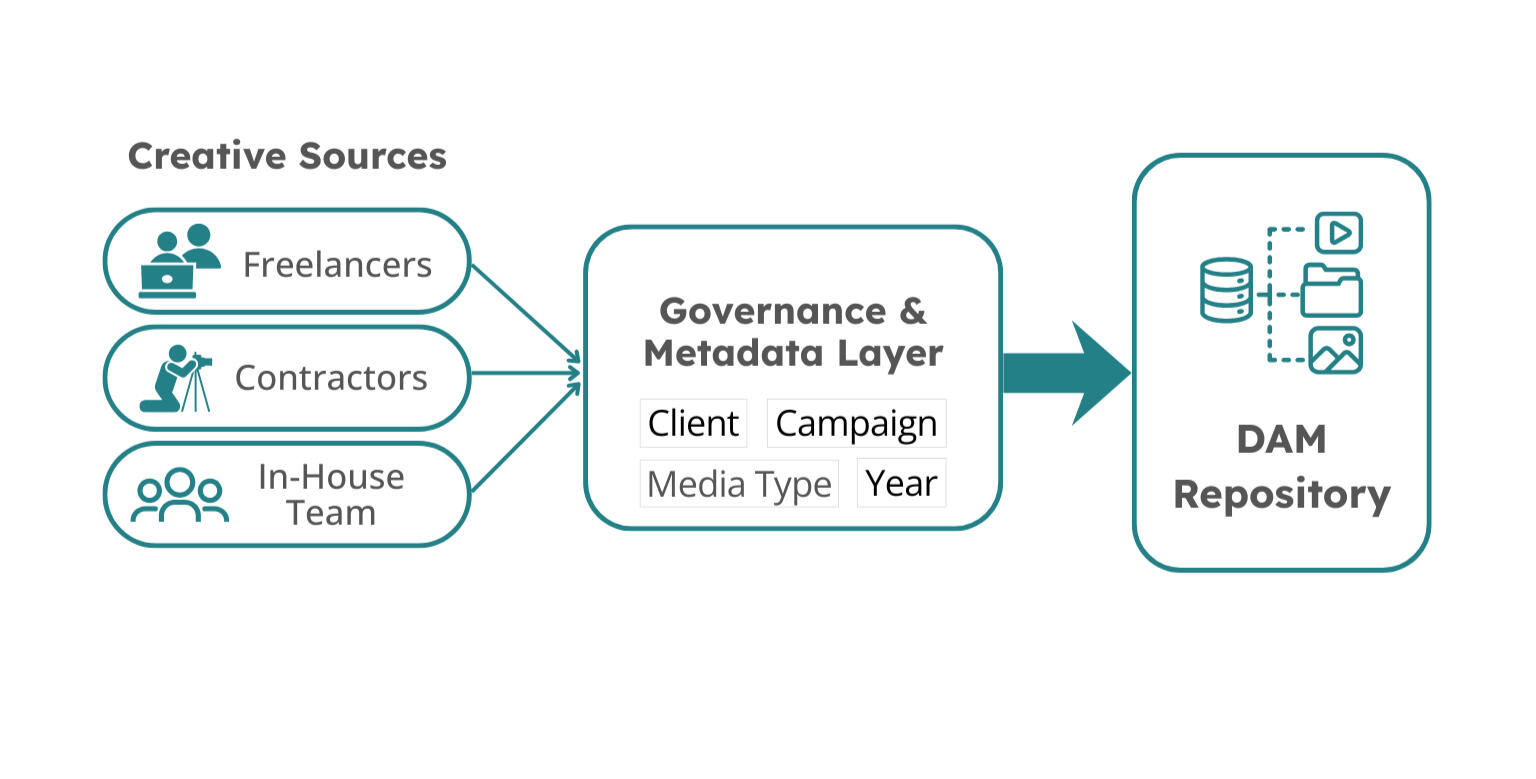
One source of truth: consistent tags, cleaner search, fewer duplicates.
Upload-to-Publish Workflow (After)
The upload process became an end-to-end workflow.
Metadata entry, QA, and sign-off were integrated checkpoints — turning a chaotic submission system into a repeatable, auditable pipeline.
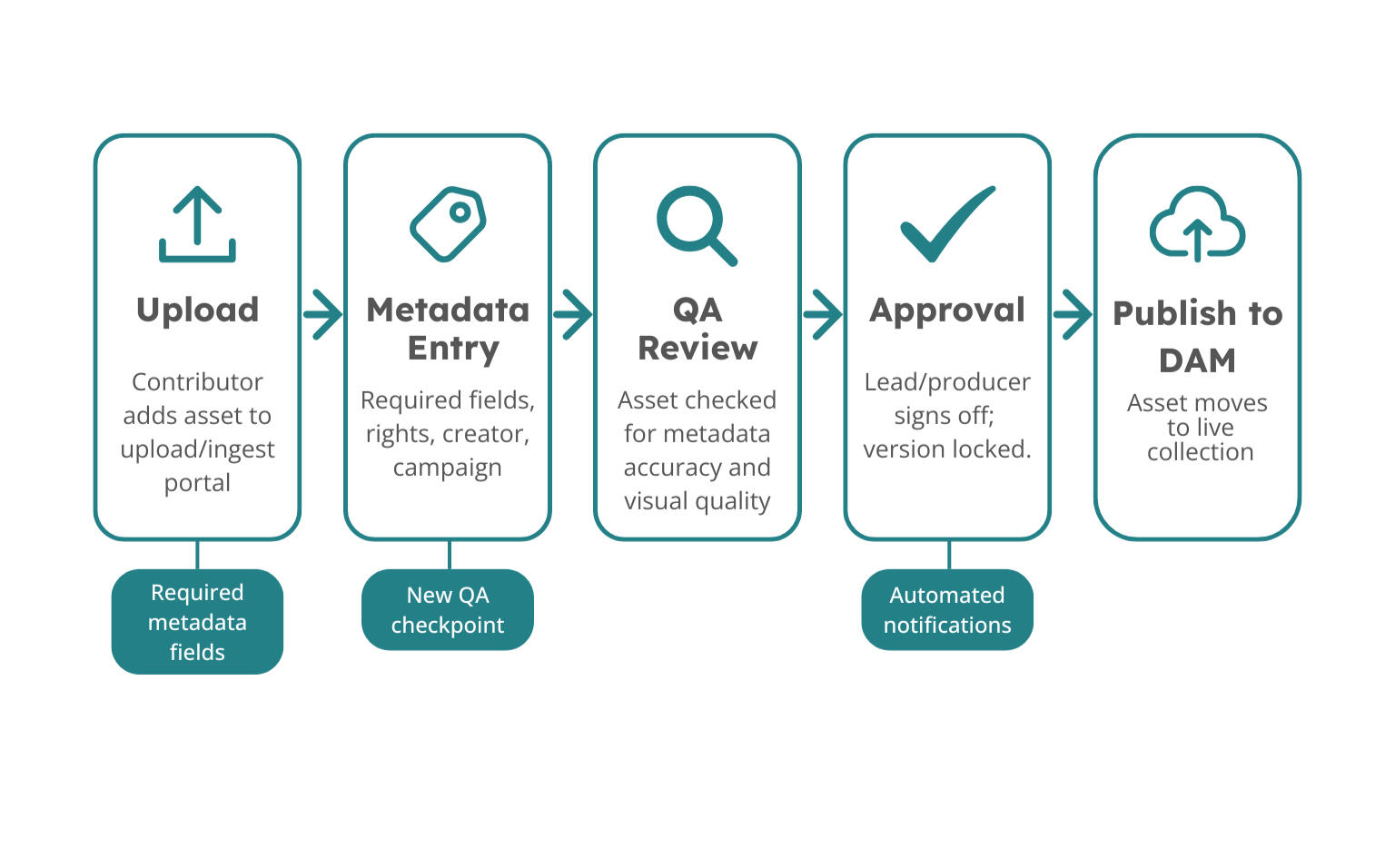
Every asset now passes the same gates — complete metadata, a QA check, and explicit approval before going live.
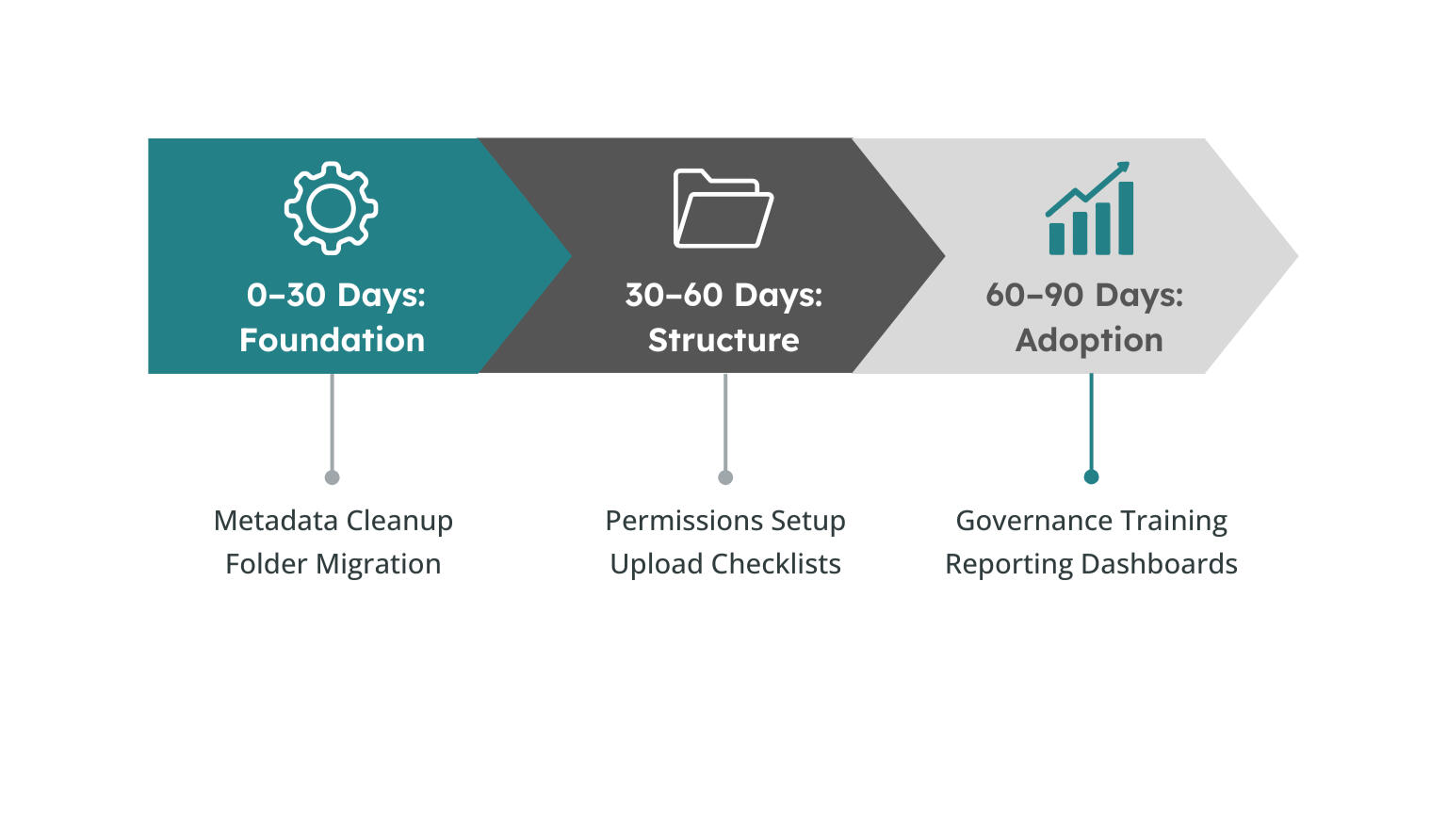
90-Day Implementation Roadmap
The rollout followed a structured timeline:
0–30 Days: Cleanup, migration, taxonomy alignment.
30–60 Days: Permissions setup, upload checklists.
60–90 Days: Training, governance reviews, reporting dashboards.
The process embedded clarity into daily operations, building long-term adoption.
Outcome after 90 days: consistent metadata, cleaner search, fewer duplicates — and a team that trusts the system.
From Chaos to Clarity
A DAM audit doesn’t just clean up assets — it recalibrates how teams think about creative flow.
What begins as version control ends as alignment between people, process, and purpose.
Contact
Have a question about this audit or want to explore how a metadata strategy could streamline your own workflow?
Let’s connect.